A.E. GILL
  • Home
  • About
  • Contact
  • Works
    • Plays
    • Poetry and Fiction
  • Writer Resources
  • Blog
  • Home
  • About
  • Contact
  • Works
    • Plays
    • Poetry and Fiction
  • Writer Resources
  • Blog

The Field Mouse's Guide to Publishing

(Nibbling small bites of a big world) 
Picture
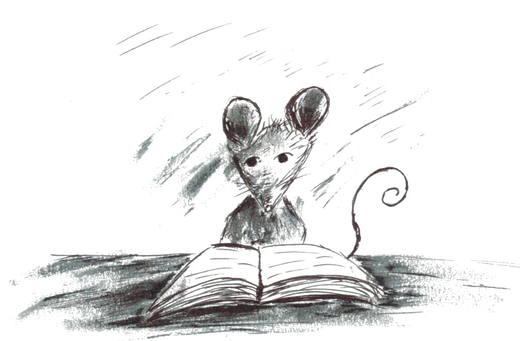
All mice are my own illustrations (including the ones in your cupboard).
Publishing is mysterious. If you feel like a tiny mouse in a huge field, this guide is for you.  Click a mouse  to learn more!

Start Here

Terms to Know
Self-Publishing
Resources for New Writers
What the writer in your life wants you to know

Traditional Publishing 

Where do your ideas come from?
Writing Process & How Long It Takes
Readers who give constructive criticism
Making your work stronger
A specialized letter to a literary agent
On Waiting Well
Your business partner and advocate
Helps make your book the best it can be
Negotiating the rights to your book
Get money!
Spreading the word about your book
Readers can find it on shelves!

The Writing Process and How Long It Takes

9/27/2020

0 Comments


Picture

Time to Write a Thing! This step-by-step guide is good for students and writers alike. 

But before you start, remember this:

  1. It’s supposed to be garbage. The writing process is about messing up. You’re supposed to make a lot of mistakes. It’s supposed to be a huge pile of trash, most of the way through. So if your work seems terrible, you’re probably doing it right.
  2. It can always be better. Always. At some point, the pile of garbage starts to sparkle and shine. Great! But it can still shine more! This doesn’t mean your best isn’t good enough. It means you’re learning to push your own limits, be your own teacher. That’s how you grow. Learn to make yourself proud, by knowing you worked as hard as you possibly could. You’ll know if you could’ve done better; you’ll also know if you did your absolute best, no matter what anybody says.
  3. It’s okay to get frustrated. It’s okay to be confused, or make mistakes. Remember step one. If you get stuck, take a deep breath and stretch. Scribble on a spare sheet of paper, or think of the last time you laughed really hard. Then keep going. You can do this. 

The Writing Process

Prewriting

This is all about brainstorming a lot of ideas. It’s like opening a toolbox: you won’t need every tool in there, but the more you have, the more you can build.

Pick a topic. Maybe someone gave you a prompt. Maybe you can make it up.  Both awesome!

"But I'm out of ideas!"
Don't freak out. Little secret: it happens to everybody. A blank sheet of paper can be scary. Even people who write for a living are scared of blank pages. Seriously. A blank page makes you think, ‘What if my idea is stupid? What if I can’t think of anything?’ It’s okay to feel that way, but you can't let it win. 

Ways To Get Ideas
  • What If? Ask yourself a few “What if?” questions, and come up with the answers. “What if everyone became invisible except me? What if the future is different?  What if ___ turned into ____? What if suddenly, ____ ?” How many can you come up with?
  • Search your feelings: What makes you angriest? What makes you happy, even when nothing is okay? What makes you laugh? What would you really like other people to understand about the way you see the world?
  • Trusty Friend: Here’s my favorite. Think of somebody you trust, who would never make fun of you. It can be somebody real, or a character you look up to, or someone who’s not around anymore. Write their name at the top of your paper. Now, imagine they can read everything you’re writing. Tell them anything you want. Tell them some more. Don’t worry, they like hearing your ideas. You can’t go wrong. If it helps, write that person's response to you, in their voice. 
  • Picture It: Can’t find the words? Try drawing it! Or, collect four or five images that have a feeling you like, and imagine what connects them. 
 
Now, look back at what you wrote or drew. Pick out the ideas you like best. These are the tools you’ll use.

Drafting

Time to build with your tools!

Here’s where you take all those scattered ideas and start putting them in order. Now, this is important. Say it with me. A draft is never perfect. It’s not supposed to be. Just get down the basic shape of the thing you want. It might take a few tries.

Just get to the end. You'll go back and fix it later, but first, you've got to have something to fix!​

Revising

Okay, remember how I said it’s not supposed to be perfect? Now’s the time to patch it up. Your goal is to make it the best it can be, and that’s going to mean re-writing it a few times. Each time you do, it’ll be better than before.

It took me about eight drafts to get the final version of my book into good enough shape to be published. But I also had about 50 other drafts of abandoned chapters, failed plots, and false starts - not counting all the chapters I threw out. 

Why? Because I knew it could be better, and I wouldn’t let myself down.


Tips:
Am I trying to put in too many ideas? Yes, they’re all good, but some of them might be getting in the way, and making it hard to understand your point. Think of basketball: if too many people are on the court, they bump into each other, and the game gets confusing.
Do I need to explain things a little more? Something that seems obvious to you might be confusing to someone else with different experiences. Imagine your reader is from outer space, and has no idea what you’re talking about. It might seem silly to you, but chances are, it’s helping your reader see what you see.
Is this doing what I wanted it to do? Be honest with yourself. Look at where you started, and where you ended. Do they match, or did you get sidetracked? Try to make sure you’re still on the same topic  or story you started with, from beginning to end. 
​

Editing

Ok. No more big changes. It’s down to all the little fixes your teachers and editors are always talking about.

Read it to yourself. Out loud, if possible. It'll help you catch mistakes your eye overlooked, and you'll hear the parts that don't sound so great. 
​
Check your punctuation – does every sentence end with some kind of punctuation mark? Is it the right kind? Did you leave any punctuation marks around where they shouldn't be? 

Check your spelling. Don’t trust a computer to understand what you meant to say.

“A heavy frog" and "a heavy fog" are both spelled correctly, but they're very different things to watch rolling over your house!  

Publishing

​You did it! You’re done! Do you have any idea how cool this is?

Listen, seriously. Most people who want to be writers never finish their story. They get through a draft, maybe two, and then they give up. No joke. You just did something that about 80% of writers have never done before. You worked hard, and you finished the thing!

Publishing it might mean handing it in to your teacher. It might mean publishing it in a school paper. It might mean printing it out and handing it to all your friends, or leaving copies at local businesses. I've done all of those!
For authors, publishing means giving a manuscript to a publisher, who prints it as a book.

That all counts! So dance a little dance. Have a snack. Imagine someone you love giving you a hug. You did it, and you’re awesome. ​

How Long Does It Take to Write a Book?

This is a little bit like asking ‘how long is a piece of string?’
Every book is different. It takes as long as it needs to take.

I know, I know. That’s pretty frustrating. Waiting is hard.

But think about the question you’re asking. When you say ‘how long does it take to write a book,’ what kind of book are you talking about? After all, there are as many kinds of books as there are ideas. Some are poems, some are recipes, some have no words at all. The very definition of ‘a book’ changes over time and place – campfire storytelling, scrolls of parchment, pages folded up like accordions, stories chiseled in stone. Maybe the kind of book you’re making hasn’t been invented yet.

No one kind of book is better or easier. What matters is how much time your idea needs, and how often you can work on it. There's no shortcut. 

Like a professional athlete, you’re always looking for ways to get stronger, quicker. You’re always challenging yourself to do better.

And that can take a while.

It’s easy to get discouraged. A lot of writers start to feel tired of their book about halfway through it. You start to forget why you were excited to write. Maybe you even feel silly working so hard on something you don’t know if anyone will ever read.

This is when you have to do something really difficult. Something that takes a lot of inner strength. You have to dig deep, and trust yourself. Trust that you’re patient enough to do this. Trust that your idea is good, and it’ll get shiny and fun again soon. Trust that your hard work will pay off. You’ll get through this. You can. You will.

How do you know when it’s strong enough?

When you know, without lying to yourself, that you’ve done your best. Remember, there’s a big difference between improvement and perfectionism; just like an athlete, you can over-train into exhaustion. But in the end, it’s up to you.

That’s kind of the great thing about it. No one is looking over your shoulder, telling you to try a little harder or asking if you’ve done your homework. It’s your story. You’re the judge. If you’re slacking, you’ll know. But you’ll also know when you’ve made yourself proud.
​
However long that takes.
0 Comments


Leave a Reply.

    Author

    I'm Ashleigh. I write stories and plays about impossible things happening to strange people. 

    Archives

    December 2020
    November 2020
    October 2020
    September 2020

    Categories

    All

    RSS Feed

Proudly powered by Weebly